From Hurricane Andrew’s catastrophic impact in 1992 to the increasing frequency of tropical storms we’re experiencing today, Miami’s weather continues to test and reshape security standards.
Looking back at Miami’s hurricane history—Andrew (1992), Wilma (2005), Irma (2017)—each major storm has revealed vulnerabilities in existing security systems and driven innovations in response. As a locksmith who began working shortly after Andrew’s devastation, I’ve seen firsthand how security technology has evolved through necessity to withstand our increasingly volatile climate.
The combination of salt air, extreme humidity, hurricane-force winds, and flooding creates a perfect storm of security vulnerabilities that standard solutions simply can’t handle. In this article, I’ll share the most common weather-related security problems I’ve encountered in Miami, the specialized solutions we’ve developed, and how we’re preparing for a future where climate models predict even more challenging conditions.
Hurricane Andrew fundamentally changed Miami’s approach to security. Before Andrew, standard locks and security systems were typically designed for moderate weather conditions. The storm’s 165+ mph winds exposed critical weaknesses:
Andrew led to Miami-Dade’s strengthened building codes, indirectly improving security standards by requiring more robust doors, windows, and structural elements. Security system manufacturers began developing “coastal environment” versions of their products specifically for markets like South Florida.
Hurricane Wilma brought new lessons, particularly regarding electronic security systems:
Wilma’s aftermath saw the first widespread adoption of marine-grade security components and multi-day battery backup systems in Miami’s commercial buildings.
By 2017, Miami had developed more sophisticated security systems, yet Hurricane Irma still revealed vulnerabilities:
Each major storm has driven innovation and adaptation in Miami’s security industry. Today’s systems incorporate lessons learned from these historical events, but climate trends suggest we’ll continue evolving our approach.
Power outages are inevitable during hurricanes and severe storms. When power fails, so do electronic access control systems, leaving properties vulnerable precisely when they need protection most. Standard backup batteries often prove inadequate for Miami’s extended outages, which can last days or even weeks.
This is particularly concerning when considering what happens if you get locked out of your house during a storm. Traditional lockout solutions may be unavailable if roads are impassable, and the average cost of a locksmith emergency in Miami hurricane response can jump from our standard $85-150 service call to $200-300 during disaster conditions—if service is available at all.
Most security systems come with basic battery backup, but these typically provide only 4-12 hours of operation—woefully inadequate for our hurricane scenarios. Additionally, when these systems do fail, they often default to an unsecured state for fire safety reasons, creating significant security vulnerabilities.
Effective hurricane-ready power backup requires a multi-layered approach:
Extended-Capacity Battery Systems
Solar Charging Integration
Solar Smart Lock Integration
Generator Integration
Critical Component Prioritization
Battery Backup System Comparison:
| Feature | Standard System | Hurricane-Ready System |
| Runtime | 4-12 hours | 72+ hours |
| Construction | Standard-sealed lead acid | Gel cell with humidity protection |
| Charging | Fixed voltage | Temperature-compensated |
| Monitoring | Basic status indicator | Advanced health monitoring |
| Expansion | Fixed capacity | Modular expansion capability |
| Cost | $120-250 | $350-680 |
| Lifespan in Miami | 1-2 years | 3-5 years |
Even with backup power, electronic security systems can fail during extreme weather. When this happens, properties become inaccessible to legitimate users or, worse, completely unsecured. Standard override systems are often poorly designed, improperly documented, or inadequately maintained, resulting in security breakdowns during emergencies.
This scenario often leads to the dreaded situation of what happens if you get locked out of your house during a hurricane. In such emergencies, only authorized Miami locksmiths with proper credentials should be trusted, as storm situations, unfortunately, attract scammers quoting far above the average cost of a locksmith for emergency services.
Additionally, many property managers discover too late that their override keys have deteriorated from lack of use or exposure to Miami’s humidity, rendering them useless when needed most.
Comprehensive manual override systems require several key elements:
Weather-Resistant Mechanical Overrides
Structured Key Management
Staff Training and Documentation
Emergency Access Provisions
Water infiltration is the primary cause of security system failures during hurricanes and heavy storms. Standard locks and electronic components quickly malfunction when exposed to Miami’s combination of driving rain, flooding, and extreme humidity.
Electronic readers, control panels, and power supplies are particularly vulnerable, with moisture causing short circuits, corrosion, and complete system failure. Even “weather-resistant” components often prove inadequate for Miami’s extreme conditions.
True water resistance requires specialized components and installation methods:
Marine-Grade Hardware Selection
Wet-Finger Compatible Biometrics
Solar Smart Lock Systems
Advanced Installation Techniques
Specialized Weatherproofing
IP Ratings for Security Components:
| IP Rating | Protection Level | Recommended Applications |
| IP54 | Limited dust and splash protection | Indoor use only in Miami |
| IP65 | Dust-tight and water-jet protection | Covered exterior locations |
| IP66 | Dust-tight and powerful water jets | General exterior applications |
| IP67 | Dust-tight and temporary immersion | Flood-prone areas |
| IP68 | Dust-tight and continuous immersion | Direct water exposure locations |
Hurricane-force winds and flying debris can physically destroy security components, particularly those mounted on exterior surfaces. Standard equipment enclosures shatter upon impact, leaving sensitive components exposed to the elements and rendering systems inoperable.
When security components fail due to impact damage, it often creates situations where residents get locked out of their houses during the worst possible conditions. The average cost of a locksmith for emergency impact-related repairs can be substantial, particularly when specialized hurricane-resistant components need replacement.
Additionally, pressure changes during storms can affect door alignment, preventing proper locking and creating security vulnerabilities even with undamaged hardware.
Comprehensive impact protection requires multiple defensive strategies:
Reinforced Component Housings
Strategic Component Positioning
Enhanced Storm-Resistant Materials
Door Reinforcement Systems
Standard security installation methods fail to account for Miami’s extreme weather conditions. Inadequate mounting, improper sealing, and failure to consider environmental factors lead to premature system failures, often during critical weather events.
When improperly installed systems fail during storms, emergency lockout situations become common, and the average cost of a locksmith for emergency service during disaster conditions can be prohibitive—if service is available at all. Only authorized locksmiths should be trusted for such critical repairs.
Additionally, poor installation documentation makes troubleshooting and repairs difficult, extending system downtime and security vulnerabilities after storms.
Hurricane-resistant installation requires specialized protocols:
Advanced Mounting Methods
Redundant System Design
Solar Smart Lock Integration
AI-Powered Maintenance Alerts
Comprehensive Documentation
Climate models project that Miami will face increasingly frequent and severe weather events in the coming decades. This presents several emerging challenges for security systems:
Current security planning often fails to account for these long-term trends, focusing instead on historical weather patterns that may no longer apply.
Forward-looking security design must incorporate climate resilience:
Enhanced Durability Standards
Adaptive System Architecture
Predictive Maintenance Based on Climate Trends
Long-Term Resilience Planning
As climate challenges intensify, several promising technologies are transforming our approach to weather-resistant security:
The latest generation of solar-powered security offers unprecedented reliability:
Traditional biometric readers fail in humid or wet conditions. New multispectral imaging technology offers reliability even with wet fingers by:
Artificial intelligence is revolutionizing security system reliability through:
Cutting-edge materials are creating new possibilities for extreme weather resistance:
Based on lessons learned through decades of Miami storms and projections for future conditions, here’s a comprehensive preparation approach:
Annual Hurricane Security Preparation Calendar:
| Month | Preparation Activity |
| January | Annual security assessment scheduling |
| February | Budget planning for upgrades |
| March | Order specialized components |
| April | Begin installation of upgrades |
| May | System testing and staff training |
| June | Battery replacement and final preparations |
| July-November | Monthly maintenance checks |
| December | Post-season evaluation |
Cost Comparison: Prevention vs. Emergency Response:
| Security Measure | Preventative Cost | Emergency/Replacement Cost | Savings |
| Battery Replacement | $150 | $450 + downtime | $300+ |
| Marine-Grade Hardware | $320 | $950 + security breach risk | $630+ |
| Water-Resistant Installation | $450 | $3,800 + system downtime | $3,350+ |
| Proper Documentation | $175 | $800 in extended service time | $625+ |
| Annual Maintenance | $350 | $2,200 in preventable failures | $1,850+ |
| TOTAL SAVINGS | $6,755+ |
Miami’s weather challenges for security systems have evolved dramatically since Hurricane Andrew reshaped our understanding of “weather resistance” in 1992. From traditional locks to AI-powered predictive maintenance, each major storm has driven innovation while revealing new vulnerabilities.
Looking ahead, climate projections suggest that Miami’s security challenges will continue to intensify. The solutions outlined in this article represent not just current best practices but forward-looking approaches designed to withstand increasingly volatile conditions.
We’re committed to creating security solutions that stand up to whatever weather challenges Miami faces, today and tomorrow. Whether you’re securing a single-family home in Coconut Grove or a high-rise in Brickell, hurricane-ready security is no longer optional—it’s essential.
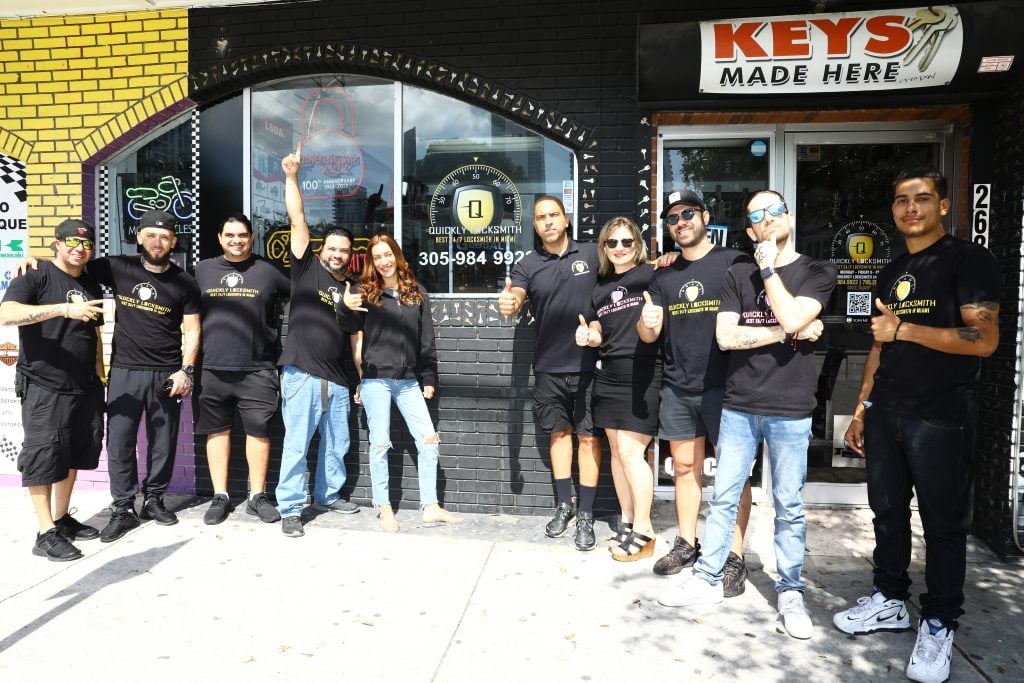
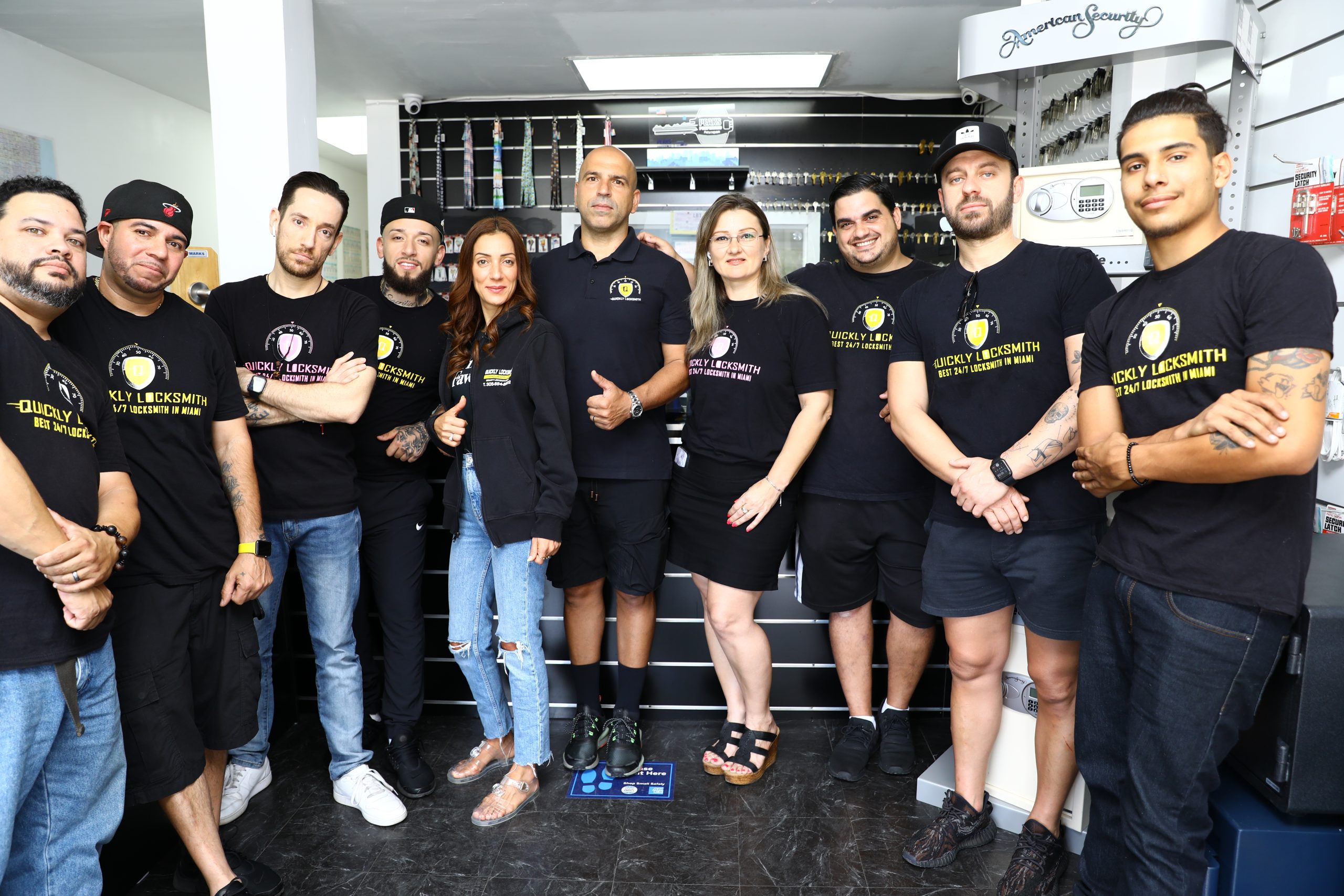
Quickly Locksmith Miami team in at the Midtown locksmith store


Every review represents a job completed with care, precision, and reliability — the same standard we bring to every call.







We serve all of Miami-Dade County and surrounding areas


We truly care about your security. Keeping you, your family and your most valuable possessions safe is why we are in business. However, whenever you are looking to hire professional services from a locksmith in Miami, here are some valuable tips to make the right choice.
Find The Nearest Locksmith To Your Location in Miami FL